Storm is The Exploration Company’s (TEC) high thrust rocket engine program, designed to advance Europe’s capabilities in modern propulsion through disciplined, hardware driven development.
Built around a full-flow staged combustion cycle and fueled by liquid oxygen and bio-methane, Storm will deliver up to 180t of sea-level thrust. It is designed for reusable launcher concepts and forms a practical foundation for future heavy European launch systems.
From the outset, Storm has been structured not as a single engine build, but as a program that systematically tackles the most demanding elements of full-flow staged propulsion: We test early iterate often, and anchor the program in manufacturable design.
What Storm Is Actually Developing
Full-flow staged combustion places extreme requirements on propulsion hardware. Storm addresses this by developing and validating its core subsystems progressively, with an emphasis on real hardware (from subsystems to integrated systems such as powerheads and powerpacks) rather than abstract models.
Our current work spans turbomachinery, main combustion chamber hardware, regeneratively cooled nozzle extensions, as well as ox-rich and fuel-rich preburners.
.jpg)
In parallel, Storm is a major manufacturing demonstrator. The program advances TEC’s capabilities in additive manufacturing, including laser powder bed fusion and directed energy deposition, as well as multi-material integration and the development of new alloys tailored to stringent conditions (high-temperature, high-pressure and oxidant environment).
Storm engines are not only designed to perform, but to be built, tested, produced, and eventually reused at scale. That also means we select technologies and manufacturing processes to allow for engine growth potential in terms of performance, size and cadence. This gives us the flexibility to answer future launcher needs, beyond the first engine and launcher generations.
Built in partnership, across countries in Europe
In partnership, initially with France’s CNES and then with ESA, within the THRUST! framework, Storm subsystems are being tested at DLR facilities in Germany, including campaigns at the P8 test bench.
These tests are focused on preburner performance, stability, and operating regimes, which serve as critical steps toward future integrated engine testing. DLR is also involved in the THRUST! Program in the development and testing of a subscale fuel-rich preburner.
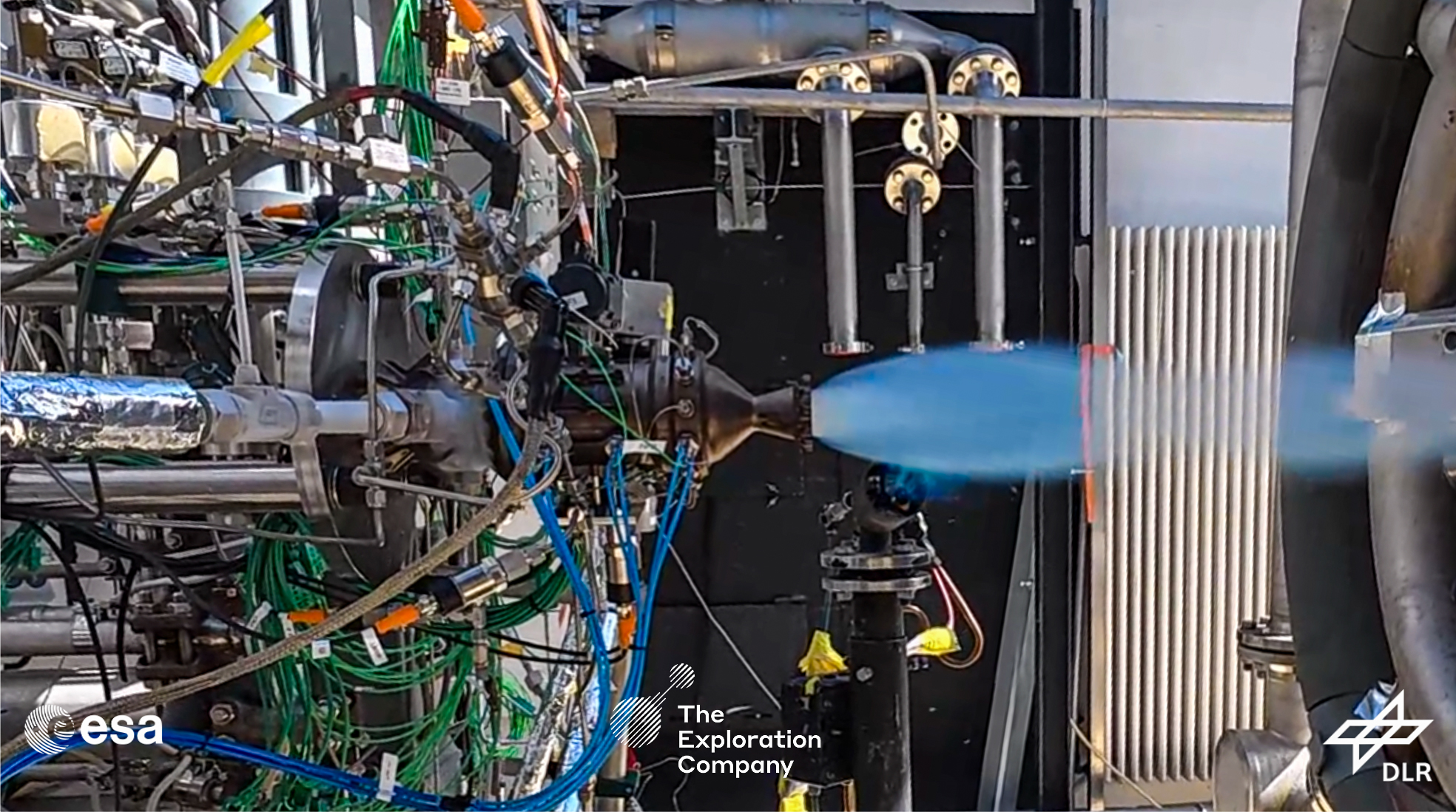
This phased test approach reflects TEC’s conviction that steady, well-instrumented hardware testing is the fastest path to technical maturity for complex propulsion cycle
Subscale testing for Storm is ongoing at DLR sites in Lampoldshausen, with further testing, including at the DLR/ESA P3.2 test bench, planned for system integration.
A First Public Glimpse at ILA Berlin
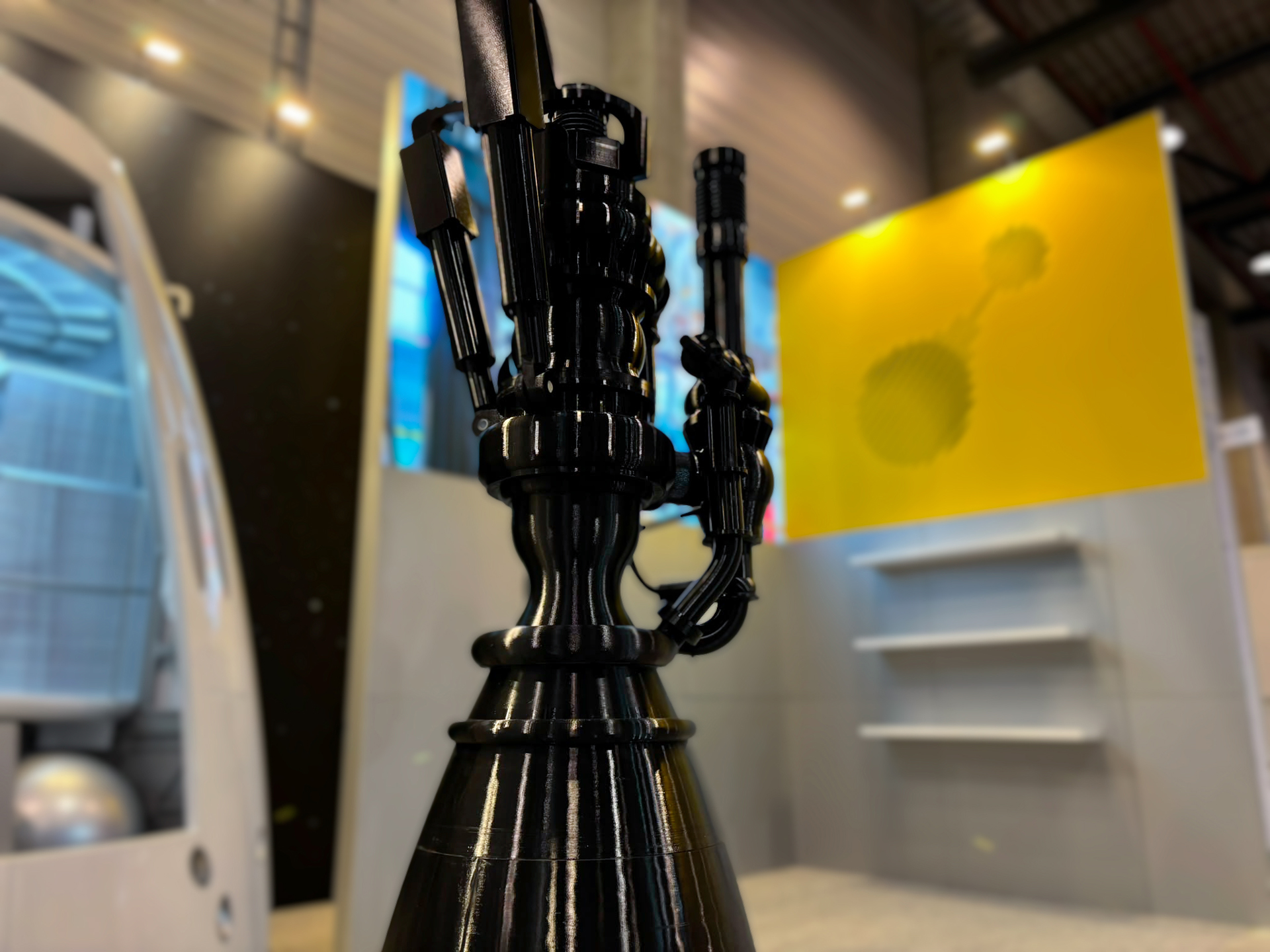
While Storm’s development has been underway for some time, ILA Berlin marks the first public unveiling of a full-scale model of the engine. The model offers a tangible look at Storm’s scale and architecture and reflects the transition from early design work into sustained hardware activity.
The unveiling is a waypoint, but it signals the beginning of a more open conversation about a propulsion program that is central to TEC’s long-term ambitions.
Much of the hardest work still lies ahead. But with hardware in development, tests underway, and capabilities steadily expanding, Storm represents a concrete step toward a new generation of European rocket propulsion.

.webp)
.jpg)
.avif)