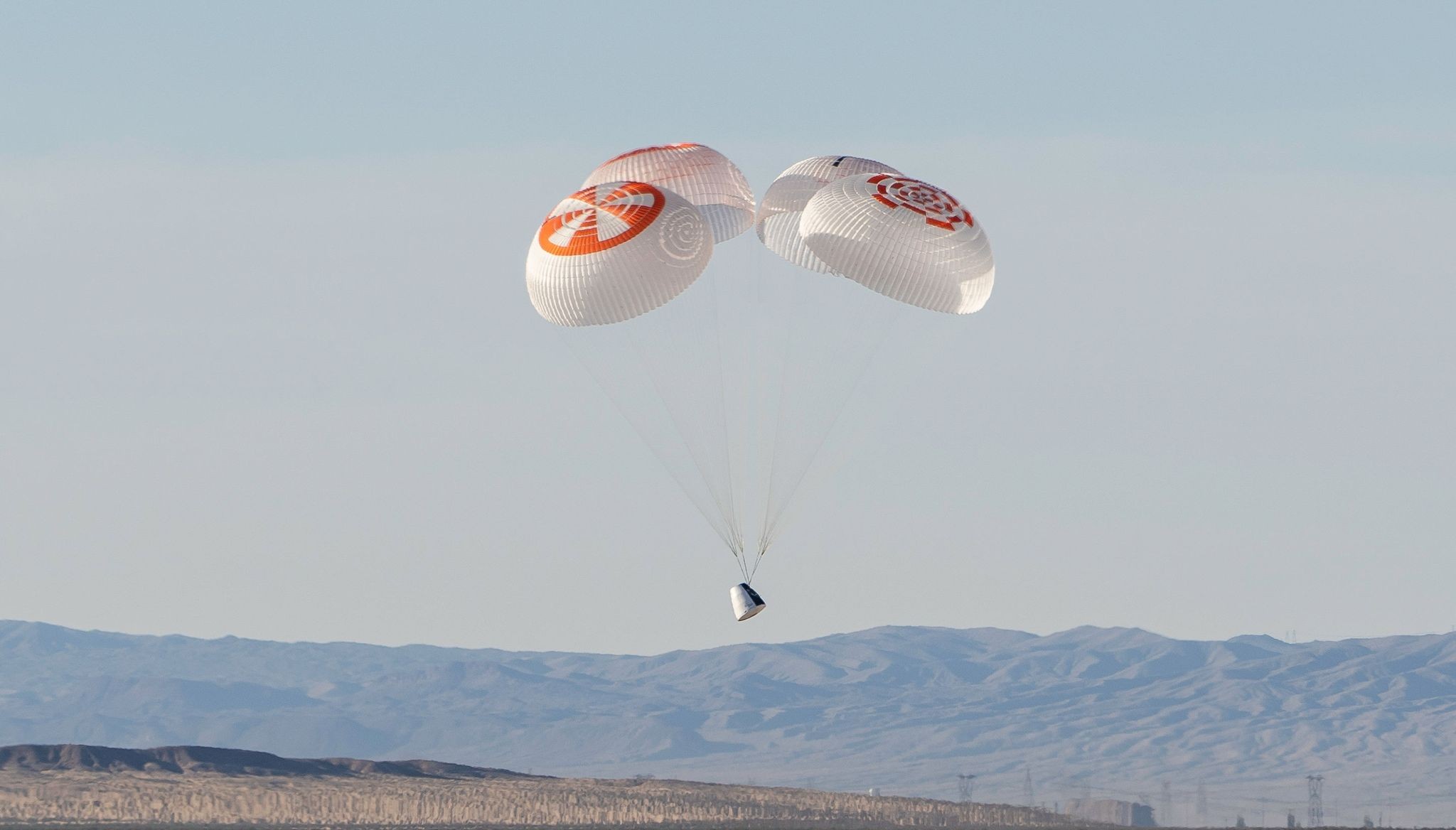
On May 19th, The Exploration Company completed a key step in the development of our Nyx spacecraft: a drop test of the recovery system in the Mojave Desert, California.
This test focused on one of the most critical phases of spacecraft recovery - the transition from drogue parachutes to the main parachutes that bring the vehicle safely to the ground.
A test designed for the question at hand
For this campaign, TEC used a dedicated drop test vehicle, or DTV, built specifically to evaluate parachute deployment, handover timing and vehicle dynamics during this phase of descent.
The DTV was not designed to be a full spacecraft. It was designed to answer a precise engineering question: does the recovery system deploy in the right sequence, at the right time, with the expected behavior?
This distinction matters. It allows us to focus effort and investment where it has the most impact - on the recovery system itself.
For this campaign, the DTV replicated the relevant mass properties, aerodynamic profile and key structural interfaces of the Nyx capsule, while using a robust internal structure and sacrificial outer panels to support ground impact, hardware recovery and future test campaigns.
Although Nyx’s first demonstration flight is planned to splash down on water, this test was deliberately conducted over land. That approach simplified logistics, enabled faster recovery of the test article and instrumentation, and ensured the team could access the data quickly after the campaign.
Moving fast, without compromising rigor
We took a deliberate approach in how we built and executed this test.
Rather than defaulting to traditional aerospace pathways for every component, we worked with specialist partners to rapidly design and manufacture the drop test model. This enabled fast iteration, robust integration of instrumentation, and short lead times — all critical for an efficient test campaign.
At the same time, the elements that needed to meet flight-relevant standards — including the parachute system and its instrumentation — remained subject to the full engineering rigor required.
The parachute system used in this test was developed in collaboration with Airborne Systems, a world-leading provider of parachute solutions with extensive experience across aerospace and defense programs. This partnership allows us to combine proven parachute expertise with TEC’s vehicle design and integration approach, ensuring that the system is tested and developed to the highest standards.
The result is a development model that prioritizes learning velocity without compromising on the quality of data we generate.
Turning engineering into evidence
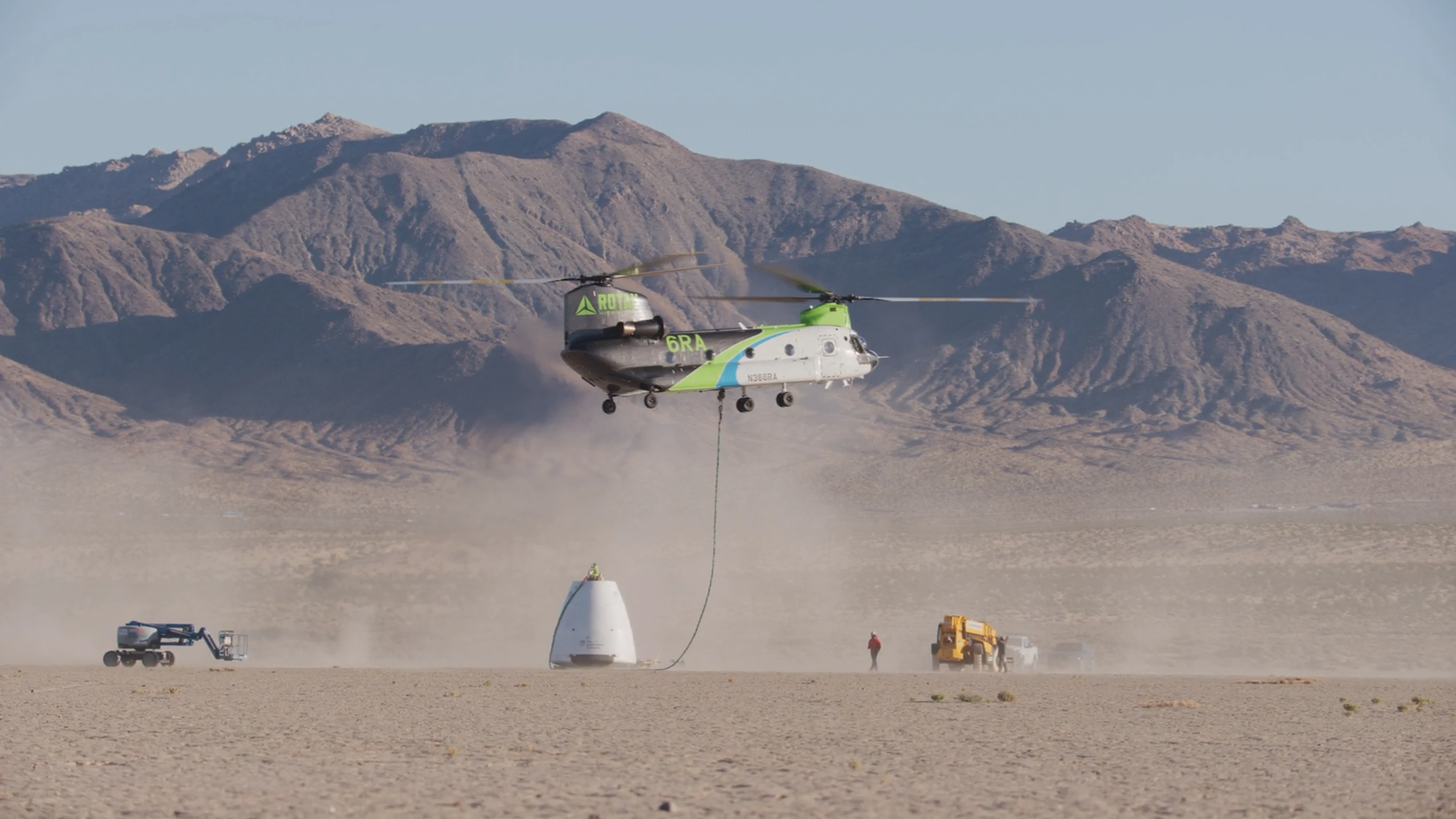
On the day of the test, the vehicle was lifted by helicopter to 9,100 ft (2.8 km) MSL altitude and released over a designated drop zone.
From there, the full deployment sequence was executed:
- Drogue parachutes static-line deployed to stabilize the vehicle
- The system transitioned to main parachutes
- The vehicle descended under controlled conditions and was recovered
The vehicle was instrumented to capture deployment timing, loads, and vehicle behavior throughout descent, providing a detailed dataset for post-test analysis.
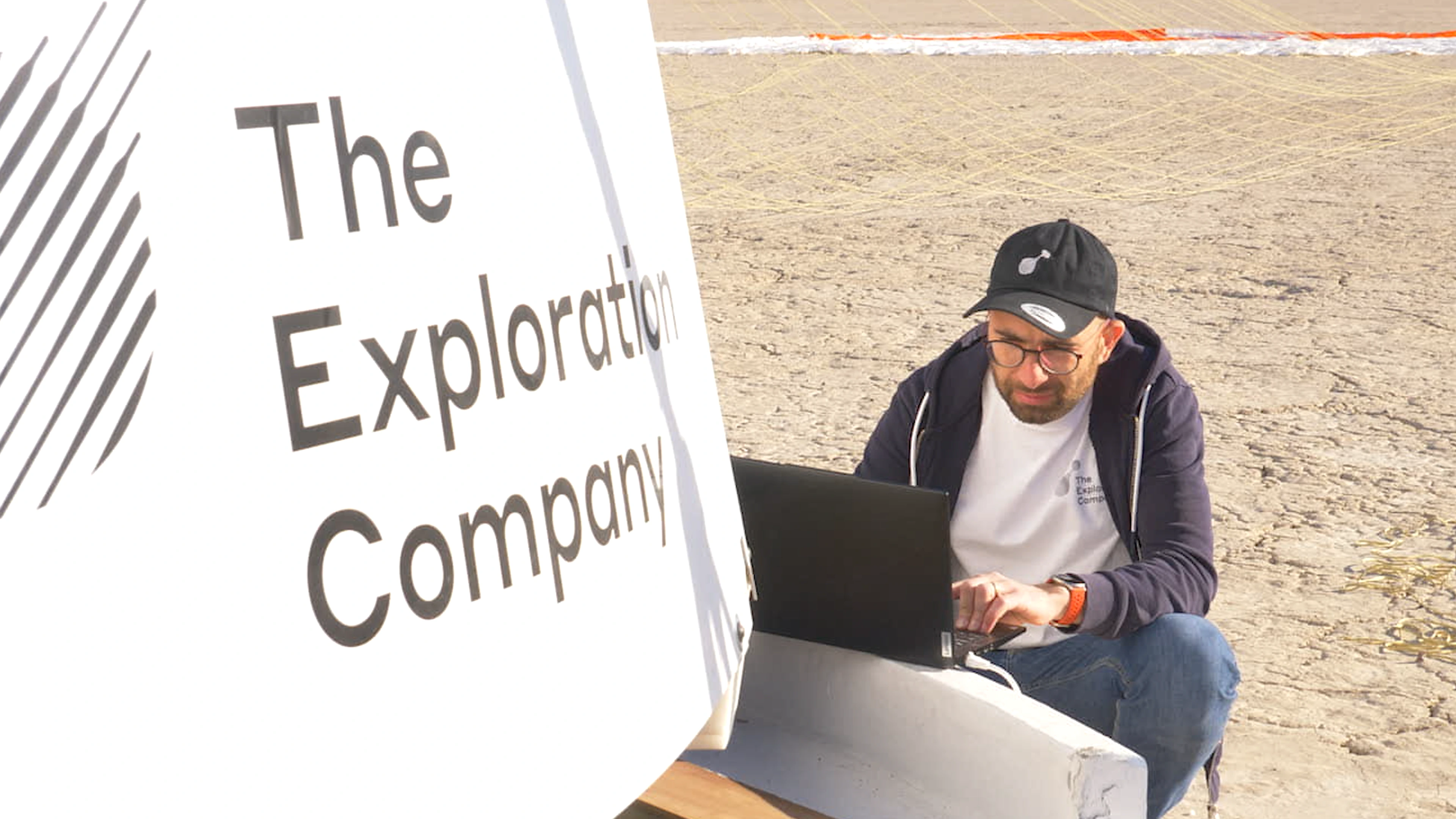
Initial analysis confirms that the required conditions and event timings were achieved, including nominal extraction and handover from the drogues to the main parachutes. The vehicle dynamics observed during initial release and handover were in line with expectations for this DTV configuration, including its mass and inertia range.
On track towards Nyx first demonstration flight in 2028
This drop test is part of a broader parachute development and qualification campaign for Nyx.
Each test in this campaign is designed to reduce uncertainty, validate system performance, and inform the next iteration.
For us, this test is another step in translating design into real-world execution. That is how Nyx is moving toward flight.
Media enquiries: media@exploration.space

.webp)
.jpg)
.avif)